

What is a Meta-Analysis?
A meta-analysis is a statistical technique that combines the results of multiple scientific studies. The meta-analysis technique was originally developed in the early 1970s and has since been used extensively in the social and medical sciences.
The meta-analysis technique helps researchers evaluate the effectiveness of a treatment or procedure, by combining data from several studies into a single analysis. There are two types of meta-analyses—systematic reviews and editorials—and they are often used together to make more informed decisions about which study findings are most important.
Systematic reviews are based on best practices for conducting scientific research, including using evidence-based methods, using valid measurement tools across multiple studies, and performing quality checks to ensure that all data have been collected properly and accurately. They also include guidelines for assessing whether there is sufficient evidence to support specific conclusions about a topic or issue.
Editorials are typically published alongside systematic reviews as part of an editorial board’s decision on whether it should recommend that a particular treatment be adopted by doctors or patients based on its effectiveness (or lack thereof).
In this blog, we will try to explain to you how to conduct a Meta-analysis for your research paper and what things you should avoid.
How to conduct a meta-analysis for your paper?
When it comes to conducting a meta-analysis for your research paper, you have a lot of options. You can do it yourself, pay an expert to do it for you, or hire a team of researchers to help you out.
But what’s the best way to go about doing this?
Let’s take a look at the steps involved in conducting a great meta-analysis for your research paper and make sure that you know exactly what you’re doing before you get started!
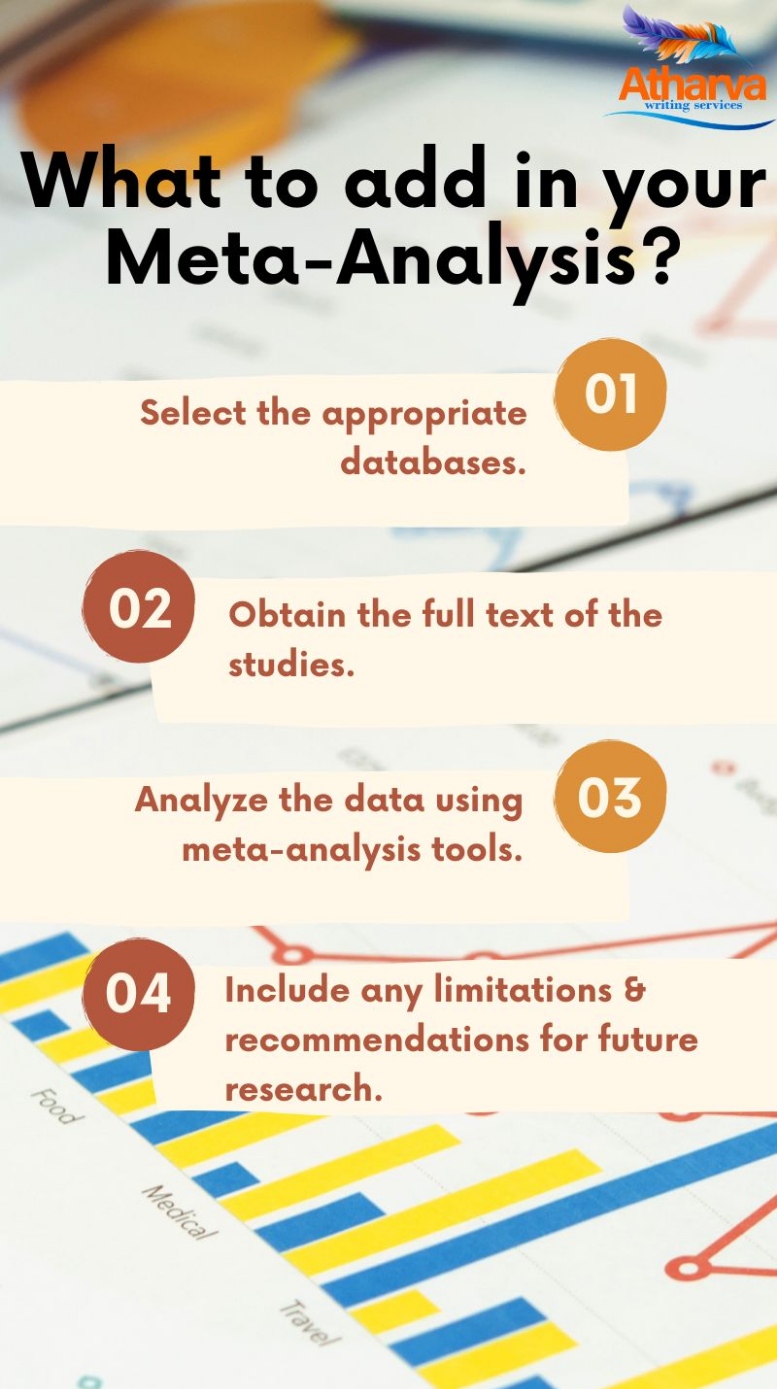
- Select the appropriate databases :
Deciding which studies you want to use in your analysis. Then, you’ll need to find all of the relevant information about those studies
- Obtain the full text of the studies:
Gather the information as much as you can to make your analysis be reached the point of perfection. Include— their name, location, population size, method of data collection and analysis, and other relevant details
- Analyze the data using a meta-analysis tool:
Once these studies have been organized into categories by category name, it’s time to start looking at the data itself! For each study included in your analysis (or set of studies), make sure that all relevant data points are included in your text; if any information is missing from one or more studies (say because it wasn’t collected), then include a note explaining why that information wasn’t included with all the rest.
- Include any limitations and recommendations for future research.
You might also consider adding notes throughout your paper where you explain what kinds of assumptions were made when interpreting the results from each particular study. Write up your findings in a formal manner. Add the recommendation for future research(es) like— how this will benefit the targeted people in their favor and how other studies take help from it to do further research in the future.
Conclusion
A research method called meta-analysis can be used to compile the results of various studies on a single subject. It can assist you in identifying any trends in your data and help you gauge the general significance of the findings.
It can be very difficult to do a meta-analysis for your research article, especially if you are doing it for the first time and are unsure of where to begin. You might ask for some online websites of writing and publishing services or enlist the aid of specialists for your meta-analysis. I hope that you have a plan for your meta-analysis after reading this article.
 Dr Ankita Gupta